September 24, 2026
Angry Nerds analyze public spending
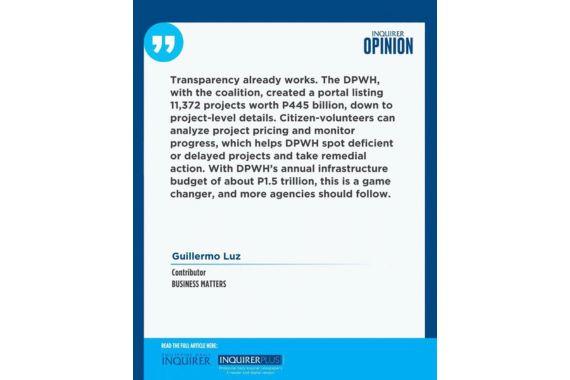
One of the best projects I’ve seen in the civic tech movement is BetterGov.PH, which just celebrated its first anniversary. This all-volunteer movement aims to make Philippine government data and services more transparent, accessible, and easier to understand, and to hold government accountable for public money spent and projects delivered. It is powered by over 5,200 civic tech volunteers around the world, known as the Angry Nerds.
Over the past year, they have undertaken over 50 projects, gathered over 439 resources, and uploaded over 100 million public records.
July 30, 2026
EVs, public transport, and clean air
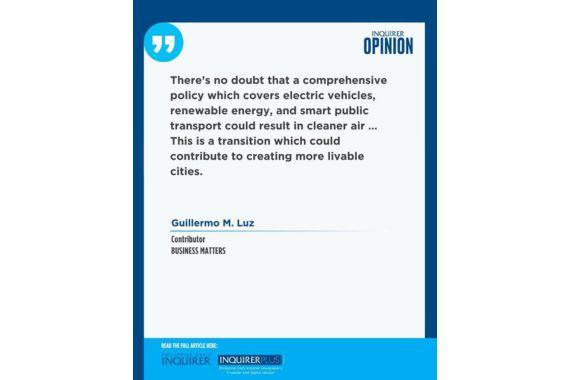
Interest in electric vehicles (EVs) has risen dramatically, driven mainly by rising fuel prices for traditional internal combustion engine cars. EV sales from January to May 2026 are up 133.5 percent over the same period last year, and EVs now account for 18 percent of the total market. There are three types: battery EVs, hybrid EVs, and plug-in hybrid EVs.
July 1, 2026
Business Community, Stakeholders Back a Circular Economy Through Legislation
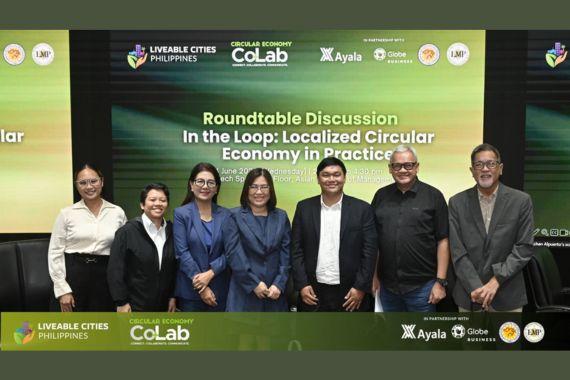
Business owners, local leaders, and government officials met at AIM Makati to discuss current waste management policies.
Community leaders, government officials, and business owners focused on building a waste management system as the foundation of the Philippine circular economy in a June 24 discussion by Liveable Cities Philippines.
Sustainability and the call to create a circular economy have now been embraced by many in the business community, Liveable Cities Philippines Chairman Guillermo Luz said.
June 25, 2026
PH climbs in World Competitiveness Ranking
There’s a saying, “what gets measured, gets managed.” The World Competitiveness Yearbook (WCY) is one of those measures. It’s not perfect, but useful. It’s been around for 37 years, constantly refining its methods among a group of economies. It enables a country to evaluate itself over time and, more importantly, to compare itself against its peers in real time. For the Philippines, this means comparing our rank against our immediate competitors in Association of Southeast Asian Nations (Asean).
June 19, 2026
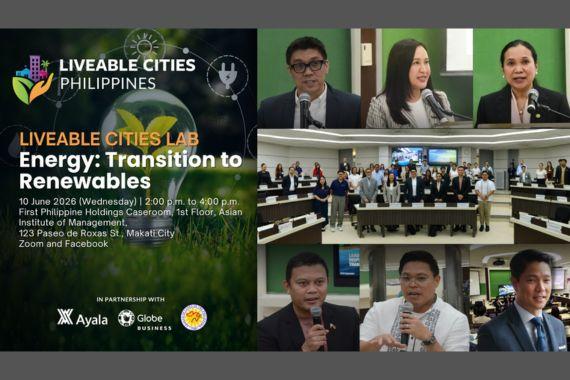
Energy: Transition to Renewables
The second Liveable Cities Lab of 2026, focused on "Energy: Transition to Renewables," was successfully convened on June 10, 2026, at the First Philippine Holdings Caseroom, Asian Institute of Management, Makati City, by Liveable Cities Philippines, in partnership with Ayala Corporation, Globe Telecom, and the League of Cities of the Philippines.
June 17, 2026
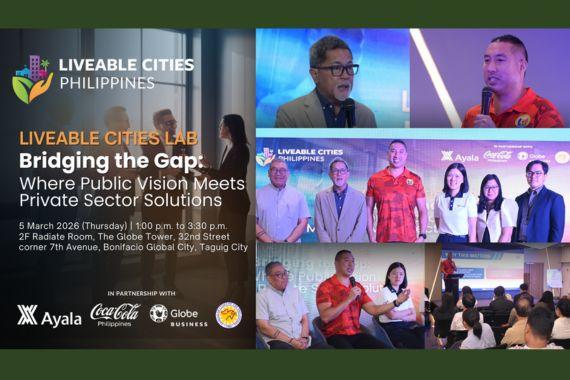
Bridging the Gap: Where Public Vision Meets Private Sector Solutions

The Liveable Cities Lab on "Bridging the Gap: Where Public Vision Meets Private Sector Solutions" was successfully convened on March 5, 2026, at Tech Space by Liveable Cities Philippines, in partnership with Ayala Corporation, Globe Telecom, and the League of Cities of the Philippines.

May 28, 2026
In search of transparent, accountable governance
A few weeks ago, the Asian Institute of Management’s Rizalino S. Navarro Center for Competitiveness organized a conference called “AIM for Change.” It was borne out of growing concern in the business community that the country is growing less competitive than its regional peers. There’s a sense that the country has fallen adrift and become rudderless, even before the current Middle East crisis started.
April 23, 2026
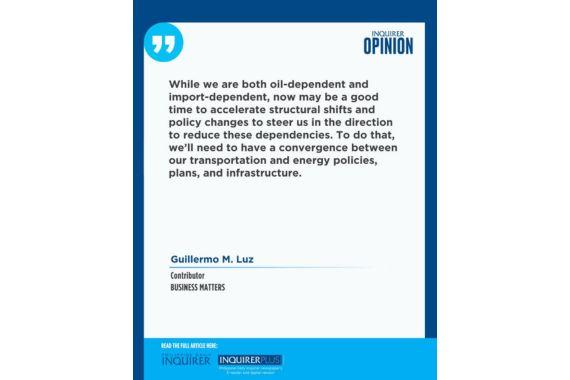
Crisis and convergence
There’s a saying that “one shouldn’t let a good crisis go to waste.” Now is one of those times. We find ourselves in a crisis situation once again, this one triggered by a Middle East conflict thousands of miles away over which we have no connection or control. Under threat are over 2 million overseas Filipino workers and our oil supply, 95 percent of which is sourced from the region.
Oftentimes, in times of crisis, we resort to immediate measures and coping mechanisms, many of which are temporary. We tend to revert to normal policy and practice once the crisis abates. Shouldn’t we look at these times as an opportunity to install long-term, permanent solutions so we can avert future crises?