Building an E-Vehicle Ecosystem: Corazon Dichosa

PH TOWARDS AUTOMOTIVE ELECTRIFICATION

Liveable cities

Published on September 8, 2021

PH TOWARDS AUTOMOTIVE ELECTRIFICATION

The Board of Investments (BOI) and the Department of Trade and Industry (DTI) see electric vehicles as a key technology to contribute to sustainable development with lower greenhouse gas emissions, less air pollution for citizens, and new job opportunities with positive social impact. Aside from environmental benefits, corresponding health benefits of e-vehicles to the Filipino population are seen, thus the journey to automotive electrification as one of the government’s mitigating measures to climate change and its impacts to the country.

In addition to climate change mitigation, the direction towards e-vehicles is aligned with the recent World Bank study on reconfiguration of Philippine participation in Global Value Chains, which has seen a rapid switch to electric vehicles. It is noted that e-vehicle sales were the least affected by the pandemic in 2020, with Tesla doubling its sales in China to USD 6 billion. Meanwhile in the Philippines, e-vehicles have been increasing, with almost 30,000 registrations today.

In transitioning to e-vehicles, the government is working to create a conducive ecosystem composed of a combination of: (1) regulations such as standards for vehicles, batteries, charging systems, charge ports, battery swapping systems, connectors, and other key parts and components of e-vehicles; (2) information, education and communication for further public awareness; (3) human resource development; (4) research and development for the advancements of new materials like composites and battery manufacturers, among others; as well as (5) industry support programs such as incentives and industry development.

To upgrade the electronics value chains in the Philippines, attracting foreign direct investments together with local investments is an opportunity. In this regard, the government has created several existing programs in place: (1) CREATE Act, which grants Income Tax Holidays of 4-7 years, Enhanced Deductions of 5 or 10 years, duty-free importation of capital equipment, raw materials and accessories, and special Corporate Income Tax of 10 (?) for exporters; (2) Motor Vehicle Development Program, which allows registered program participants 1% or 0% duty-free importation of parts and components; and (3) EV Bill, which provides CREATE incentives and non-fiscal incentives.


Other articles on Building an E-Vehicle Ecosystem:

Building an E-Vehicle Ecosystem: Freddie Tinga

MOVING PEOPLE TO A BETTER TOMORROW

Liveable cities

Published on September 8, 2021

MOVING PEOPLE TO A BETTER TOMORROW

Freddie Tinga posed two critical challenges experienced by developing cities: traffic congestion and air pollution. The latest figures suggest that traffic congestion alone cost the global economy more than a trillion dollars last year while air pollution, on the other hand, caused seven million deaths a year. In the Philippines, there are over 200,000 jeepneys nationwide with 80,000 in Metro Manila - accounting for 40% of public transport and 30% of air pollution. To solve this, Mr. Tinga emphasized the need for creating a smart and efficient transport system in the country. 

With technology on the rise, the development of smartphones and e-vehicles brings us a step closer to solving the transport issues in the country - all of which are core elements of Freddie Tinga’s EV production firm, Global Electric Transport. Global and local partnerships from the manufacturing and data analytics industry have led them to create the country’s first air-conditioned electric bus, COMET, coupled with a comprehensive smartphone data-driven transport app, GETPASS. “We are not just in the business of building the vehicle itself and selling it. Our business model and our approach is creating an ecosystem,” said GET CEO Freddie Tinga during the 8th Liveable Cities Lab on Mobility held last September 8.   

GET’s system monitors the COMET from the doorway to the highway. It has now expanded to a multitude of digital services functioning as a payment system, personnel management system, and contact tracing system in the wake of the 2020 Coronavirus pandemic - creating not only a sustainable transport solution but an ideal smart one. To ensure that its sustainable transportation system stays in place, the company adopted the Bayanihan Business Model to include engineers, programmers, and people involved with on-the-ground operations. Mr. Tinga then concluded by saying, “This is an exciting time for us, we feel we have a global solution that we are polishing here in the Philippines. It’s a solution that will be able to transform a lot of urban environments around the world.”


Other articles on Building an E-Vehicle Ecosystem:

Building an E-Vehicle Ecosystem: Art Tan

IT TAKES A COUNTRY TO BUILD AN EV ECOSYSTEM

Liveable cities

Published on September 8, 2021

IT TAKES A COUNTRY TO BUILD AN EV ECOSYSTEM

The African proverb which goes, “It takes a village to raise a child”, could not be truer as it applies to building an electric vehicle ecosystem. As Art Tan, CEO of AC Industrials and Integrated Micro-electronics Inc. said during the Liveable Cities Challenge webinar, “The EV revolution, or just the ability to be able to put electric vehicles on the road, is (such that) the vehicle itself is just one part of the ecosystem, and what we need to do is to understand how this entire ecosystem is going to be put in place.” To build a thriving, technically feasible, and commercially viable EV transport system, we will need a ‘village’, composed of the electricity grid, battery systems, charging infrastructure, cleaner energy sources like renewables, and even an EV manufacturing industry.

Mr. Tan goes on to identify an opportunity space for the local industrial sector in anticipation of an EV revolution, “The holy grail for the Philippines has always been how to be able to be part of that automotive manufacturing environment.” Since supply chains for EVs are different from internal combustion vehicles, there is a new level playing field for market entrants. “The nice part  about it is that majority of the electric vehicle components, the critical ones that are necessary to do this, is already existing in the PH, and this is something that we are ahead on.”

He points to the different capabilities within the Ayala Group and local partners on energy supply, vehicle parts and components, assembly, distribution, charging, and payment systems – that can deliver an integrated EV ecosystem.

Mr. Tan’s talk clearly shows that the ingredient needed to raise a viable EV ecosystem is in place. Now, it just takes the village to get behind this to make it happen.

Event partners: Dassault Systemes, Globe Telecom, League of Cities of the Philippines (LCP), and CCI France Philippines.


Other articles on Building an E-Vehicle Ecosystem:

Butuan’s Data-Driven Initiative to Empower Local Farmers

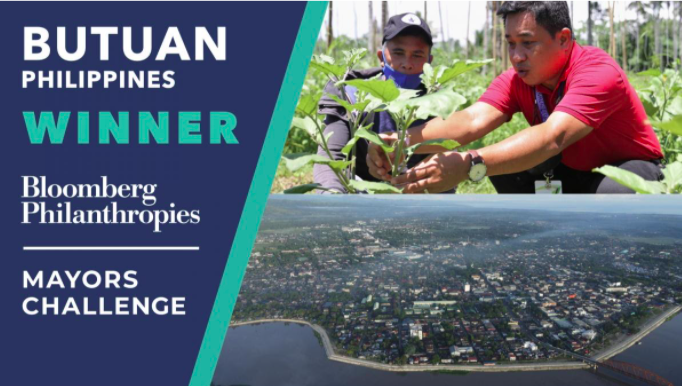
Liveable Cities Challenge congratulates Butuan City for being selected as one of two cities in the Philippines and Southeast Asia (the other city is Manila) by Bloomberg Philanthropies in the 2021 Global Mayors Challenge.

Butuan City Mayor Ronnie Vicente Lagnada’s digital and data-driven approach in transforming the city’s agricultural ecosystem represents one of Bloomberg Philanthropies’ leading top 50 innovative solutions in the 2021 Mayors Challenge.  

Butuan’s Data-Driven Initiative to Empower Local Farmers

Published on October 29, 2021

Early this year, Liveable Cities partnered with the Bloomberg Global Mayors Challenge to encourage Philippine cities to participate in this competition. Fifty-two Philippine cities submitted entries and two -- Manila and Butuan -- were eventually selected as Top 50 cities and eligible for the final round where 15 winners will be selected. 

Liveable Cities Challenge congratulates Butuan City for being selected as one of two cities in the Philippines and Southeast Asia (the other city is Manila) by Bloomberg Philanthropies in the 2021 Global Mayors Challenge.

Butuan City Mayor Ronnie Vicente Lagnada’s digital and data-driven approach in transforming the city’s agricultural ecosystem represents one of Bloomberg Philanthropies’ leading top 50 innovative solutions in the 2021 Mayors Challenge. As one of this year’s champion cities, Butuan had exclusive access to Bloomberg’s network of innovation experts and dedicated funding to test and refine their proposals from June until October 2021. 

In the face of the pandemic’s enormous challenges, Butuan City felt the urgent need to address food and nutrition insecurity in their city. Even with a vast agricultural mass of land, it continues to rely on vegetable imports from other cities and suffers from high rates of hunger and food insecurity. As the city confronts these challenges, how can Butuan make the most of their land and help farmers produce food more sustainably and efficiently? 


Photo by: Butuan PIO


Because of this, Mayor Lagnada launched a data-driven initiative that uses predictive analytics to upskill farmers and transform the agribusiness value chain system in the city. Through demand forecasts and price prediction models, farmers will have the ability to gather agricultural insights on the type and amount of crops to plant and fix commodity prices on their local food production. This initiative aims to increase vegetable production to 150% by 2023, raise farmers’ income by 50%, and reduce the average vegetable retail price by 50%. This proposed solution will also ensure an adequate supply of affordable and nutritious food while improving food logistics and the agricultural value chain system – transforming Butuan into a self-sustaining city.

Through this business model, local farmers and cities altogether will be able to utilize data and make more informed decisions that will drive a more sustainable and inclusive food ecosystem. 

Ever since the competition launched, Liveable Cities Challenge Philippines has been promoting Bloomberg Philanthropies' Mayors Challenge to all Philippine mayors nationwide. In this final round, we will continue to support and help our two cities, Manila and Butuan City, through our mentoring services to make them winners of this year’s global Mayors Challenge. 

Go Manila: Building the City’s First Data Digital Infrastructure

Liveable Cities Challenge congratulates the City of Manila for being selected as one of two cities in the Philippines and Southeast Asia (the other city is Butuan) by Bloomberg Philanthropies in the 2021 Global Mayors Challenge.

Mayor Francisco “Isko Moreno '' Domagoso's GO Manila initiative, a city-wide and data-driven digital infrastructure, has been recognized by Bloomberg as one of the top 50 urban transformative innovations for the Mayors’ Challenge ⁠— making the nation’s capital a finalist for the Championship phase in this year’s competition. 

Go Manila: Building the City’s First Data Digital Infrastructure

Published on October 29, 2021

Photo by: Bloomberg Philanthropies

Early this year, Liveable Cities partnered with the Bloomberg Global Mayors Challenge to encourage Philippine cities to participate in this competition. Fifty-two Philippine cities submitted entries and two -- Manila and Butuan -- were eventually selected as Top 50 cities and eligible for the final round where 15 winners will be selected. 

Liveable Cities Challenge congratulates the City of Manila for being selected as one of two cities in the Philippines and Southeast Asia (the other city is Butuan) by Bloomberg Philanthropies in the 2021 Global Mayors Challenge.

Mayor Francisco “Isko Moreno '' Domagoso's GO Manila initiative, a city-wide and data-driven digital infrastructure, has been recognized by Bloomberg as one of the top 50 urban transformative innovations for the Mayors’ Challenge ⁠— making the nation’s capital a finalist for the Championship phase in this year’s competition. As the city advanced to the second phase, Manila was able to test and refine its proposal with technical assistance from Bloomberg Philanthropies’ network of international innovation experts from June through October. 

For years, Manila has been struggling to find quantitative and current data - a crucial and integral component in determining and tracking city performance. After its attempt to gather data in 2006 through the “Manila Socio-Economic and Physical Profile” program, there has never been any other serious initiative to solve the underlying challenge of the city’s lack of data. Without comprehensive and reliable data, how can its city government fully address and understand the challenges that its 1.8 million Manilenos face every day? 

Photo by: City of Manila

To resolve this, Mayor Isko Moreno proposed Go Manila, the city’s first-ever multi-dimensional digital infrastructure designed to upskill city government and uplift its residents in a cross-cutting strategy of improving access to digital education, expediting government and business transactions through contactless city services, increasing disease surveillance, and achieving digital competency by 2023 for the citizens of Manila. This initiative also encourages improved policies and programs that will drive better governance, influence policy-making decisions, and promote transparency in the local government.  

Building this digital ecosystem will not only benefit the city long-term but can also serve as a model for other cities, globally and locally, that identify with the same challenge. 

For the past few months, Liveable Cities Challenge has been encouraging cities and municipalities nationwide to join the Bloomberg Philanthropies Global Mayors Challenge. As we enter the final phase, we are committed to helping our two Philippine cities, Manila and Butuan, earn a spot in the top 15 grand prize winners of the 2021 Global Mayors Challenge. 


Green Buildings and Open Spaces: Nathaniel “Dinky” von Einsiedel

TOWARDS GREEN AND HEALTHY COMMUNITIES

Liveable cities

Published on August 25, 2021

TOWARDS GREEN AND HEALTHY COMMUNITIES

ASSURE President Nathaniel “Dinky” von Einsiedel’s presentation centers on the spatial implications of the pandemic and the necessary urban developments that can mitigate the spread of future contagions and reduce adverse social, economic, and environmental impacts on cities. All these as we build greener and healthier communities.

Regions, cities and down to neighborhoods have all experienced drastic changes due to the health crisis. The pandemic has revealed the vulnerabilities of supply chains and the inequitable distribution of essential services on both a regional and city scale. Border closures and lockdowns have limited the movement of people, goods, and services - ultimately affecting transport and logistics systems and the connectivity between urban and rural areas.

To meet this challenge, building resilient supply chains involves integrating logistics and a mobility network in land use and transport plans. The presentation also provides striking examples of compact, 15-minute neighborhoods and repurposed public spaces for emergency and disaster use.

 “Cities with a more equitable and accessible distribution of basic services were able to manage risks in their communities - emphasizing that well-planned and spatially equitable cities were more resilient to health crises and future shocks,” Dinky concluded.


Other articles on Green Spaces and Open Buildings:

Green Buildings and Open Spaces: Mayor Jerry Treñas

PARTNERSHIPS FOR A LIVEABLE ILOILO CITY

Situated in the heart of the Philippine archipelago, Iloilo is one of the top tourist destinations in the country. However, it is also home to the Ilonggos who face the risks brought by natural and human-induced hazards.

Liveable cities

Published on August 25, 2021

PARTNERSHIPS FOR A LIVEABLE ILOILO CITY

Situated in the heart of the Philippine archipelago, Iloilo is one of the top tourist destinations in the country. However, it is also home to the Ilonggos who face the risks brought by natural and human-induced hazards.

To address this, Iloilo City Mayor Jerry Treñas shared their collective efforts in creating a resilient and sustainable city amidst the socio-economic challenges brought about by the pandemic. With rapid urbanization, Iloilo continues to embark on a massive tree planting and environment-friendly activities.

The city expanded its communal urban vegetable garden project called the “ediscape” or edible landscape. One year after the program was launched in 12 barangays in August last year, 36 more villages joined in, this time integrating farming with fishery and poultry. The updated comprehensive land use plan is also being finalized to keep track with improvements and competitiveness of the vibrant and liveable metropolis.

Other green projects currently implemented and in the pipeline include:

1. Iloilo Beach Forest - a 3-hectare project to be implemented in partnership with DENR and DPWH

2. Iloilo City Tree Park - a 3-hectare tree park in Jaro that will be planted with endemic trees

3. Green Tunnels - situated along the bike lanes in Diversion Road

4. Mini-forest - to be built in the open spaces in subdivisions

5. Mangrove Eco Park - a 35-hectare mangrove forest development in La Paz with support from DENR and a private company.

Tree planting and coastal clean-up continue to be part of the efforts to mitigate climate change, as the city was looking at harnessing more renewable energy.

Mayor Jerry Treñas concluded by underscoring the importance of LGU and private sector collaboration in building progress, green and sustainable communities.


Other articles on Green Spaces and Open Buildings:

Green Buildings and Open Spaces: Cathy Saldana

GREEN BUILDINGS IN LIVEABLE CITIES

Liveable cities

Published on August 25, 2021

GREEN BUILDINGS IN LIVEABLE CITIES

Architect Cathy Saldana outlined the criteria for the liveability of cities as: stability, healthcare, education, culture, and environment. These correlate with the standard of environmental and social components, which look into: employment and economic opportunities, education and skills development, health and safety, equality, and community engagement and benefit.

In terms of a liveable structure, it is crucial to transport and mobility- the location of a building and its proximity to key establishments like supermarkets, hospitals, schools, and its accessibility to public transportation, including amenities for cyclists and pedestrians. It should also consider the environmental indoor quality, such as: daylight and outdoors views, access to thermal comfort, visual comfort, acoustic comfort, indoor air quality, low VOC environment, microbial contamination prevention, and others.

Architect Cathy listed key recommendations that would promote green buildings in liveable cities:

1. For policymakers to enact a national legislation that provides tax incentives and other measures that would encourage investing in green buildings,

2. For architects and planners to raise the standards and adopt a more liveable approach

3. For LGUs to pass ordinances that would ensure that structures are built according to green standards

“It is important that going green is embodied in our culture and is a public responsibility.”


Other articles on Green Spaces and Open Buildings:

Green Buildings and Open Spaces: Paulo Alcazaren

FROM GREY TO GREEN

The World Health Organization recommends a minimum provision for nine square meters of public park and open space (PPOS) for every city resident.  Unfortunately, for a person living in Metro Manila, reports say they only have one square meter of PPOS.

Liveable cities

Published on August 25, 2021

FROM GREY TO GREEN

The World Health Organization recommends a minimum provision for nine square meters of public park and open space (PPOS) for every city resident.  Unfortunately, for a person living in Metro Manila, reports say they only have one square meter of PPOS.

According to Architect Paulo Alcazaren, this really seems a daunting task. Besides very few parks and open spaces, which have been built in the past 60 years, cities in the Philippines also need to allocate land area for three: (1) affordable public housing (with a backlog of 5-6 million housing units nationwide), (2) hospitals (very important now, more than ever), and (3) mobility infrastructure.

Paulo presented how public spaces can be clawed back from the already cramped spaces of the city through smaller scale initiatives.

This ‘grey to green’ transformation may be in the form of a few square meters of piazzas and esplanades, a couple of kilometers of sidewalks and riverbanks, repurposed rooftops of existing buildings, pocket parks and patios, and revitalized city plazas. Another approach is to consider not just space but also time. For example, could school grounds be opened for the enjoyment of local residents, when there are no classes.

As with many complex urban challenges, there really is no single solution, but rather a matrix of fixes must be employed, aimed at delivering a range of benefits, taken together will amount to a substantial improvement.


Other articles on Green Spaces and Open Buildings:

Report III

Lorem Ipsum is simply dummy text of the printing and typesetting industry. Lorem Ipsum has been the industry's standard dummy text ever since the 1500s, when an unknown printer took a galley of type and scrambled it to make a type specimen book. It has survived not only five centuries, but also the leap into electronic typesetting, remaining essentially unchanged. It was popularised in the 1960s with the release of Letraset sheets containing Lorem Ipsum passages, and more recently with desktop publishing software like Aldus PageMaker including versions of Lorem Ipsum.

Watch Our Liveable Cities Labs

Watch Now