Liveable Cities Dashboard: Towards Data-Driven Cities

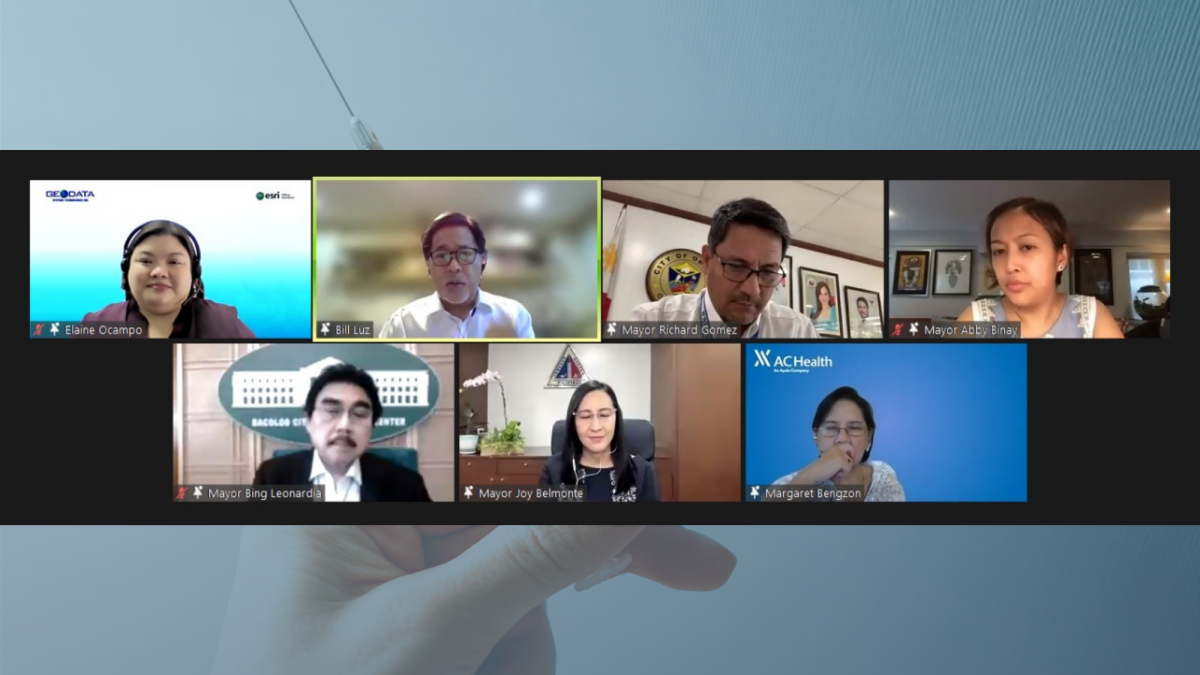
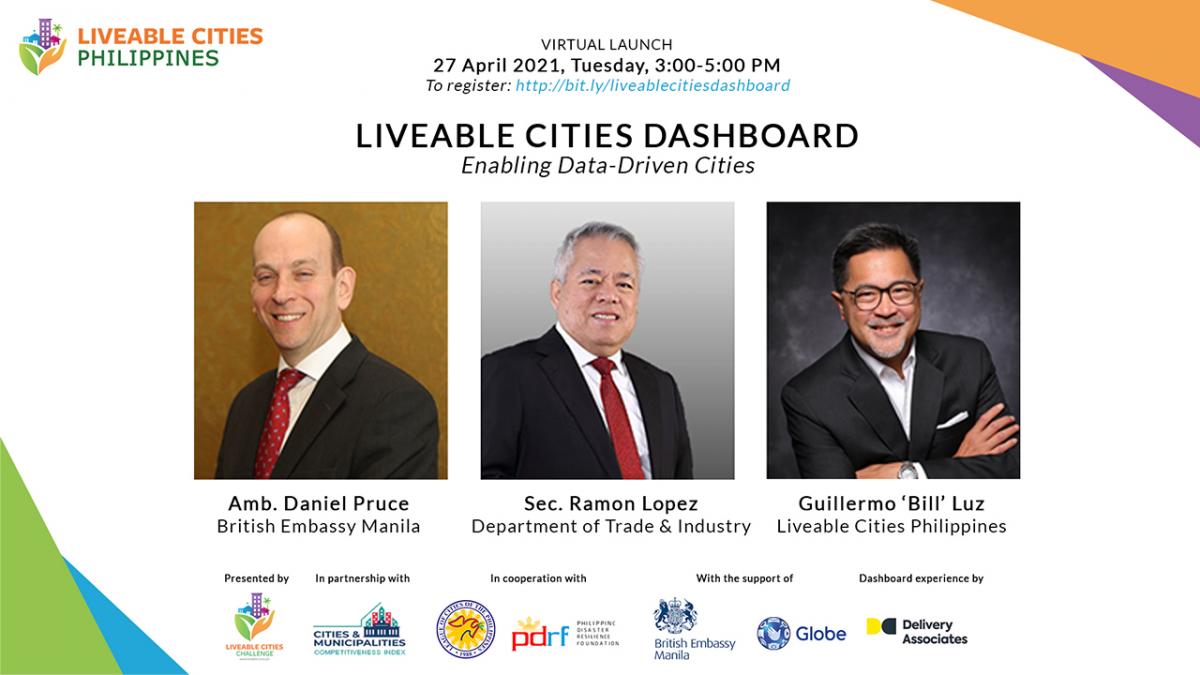
A new and improved Liveable Cities Dashboard is set to launch this April. A preview to this project was presented by Liveable Cities Challenge Chairman Bill Luz and UK Ambassador to the Philippines Daniel Pruce during the first (virtual) Liveable Cities Labs for 2021 on February 24.

Liveable cities

Published on February 26, 2021

A new and improved Liveable Cities Dashboard is set to launch this April. A preview to this project was presented by Liveable Cities Challenge Chairman Bill Luz and UK Ambassador to the Philippines Daniel Pruce during the first (virtual) Liveable Cities Labs for 2021 on February 24.

The Dashboard creates a visual overview and informative profile of the 146 cities in the Philippines. It consolidates multiple data sources of city information across various indicators over time - Basic Info, Jobs and Skills, Education, Local Economy, Doing Business, Mobility and Interconnectivity, Health, Urban Environment, Resiliency and Emergency Response, and Safety and Security.

“It allows local chief executives and managers to make informed decisions and improve service delivery. It can help gain insights to formulate policies and improve accountability and understanding of local operations. It also allows citizens and the private sector to identify innovative ways of using public data to engage with their local government,” said Bill Luz on the Liveable Cities Dashboard.

“We hope very much that the Dashboard will help foster an innovative mentality and collaborative attitude towards a more sustainable and inclusive city planning and governance approach; and in moving toward digitalization, we likewise pave the path the democratizing city planning and policy-making grassroots level to promote healthier, greener, and more resilient cities,” Ambassador Pruce added in his message.

The Liveable Cities Dashboard is a project of the Liveable Cities Challenge Philippines with the support of the British Embassy Manila and Globe, and in partnership with the Cities Municipalities Competitiveness Index, the League of Cities of the Philippines, the Philippine Disaster Resilience Foundation, and with the Delivery Associates as the platform developer.

Watch: Liveable Cities Dashboard Coming Soon


Global Mayors Challenge 2021 Briefing

The Liveable Cities Challenge and the League of Cities Philippines, in partnership with Globe Telecom, just recently conducted a Virtual Briefing on Bloomberg Philanthropies 2021 Mayors Challenge held last 10 February 2021 (Wednesday) from 10:00 AM - 11:30 AM. 

Liveable cities

Published on February 11, 2021

The Liveable Cities Challenge and the League of Cities Philippines, in partnership with Globe Telecom, just recently conducted a Virtual Briefing on Bloomberg Philanthropies 2021 Mayors Challenge held last 10 February 2021 (Wednesday) from 10:00 AM - 11:30 AM. 

Our guest speakers, Bloomberg Philanthropies' Michael Odermatt and Centre for Public Impact's Eamon Nolan provided an overview and guide for the Mayors Challenge to Philippine mayors, city representatives, and local experts. Through this briefing, mayors and mentors were able to engage in a very interactive and insightful discussion with our Bloomberg representatives - resulting in a higher level of interest among participants to join the challenge. According to Bloomberg's report, we are pleased to announce that a total of 32 mayors have already signed up for the Mayors Challenge. 

To register and know more about the competition, please visit https://bloombergcities.jhu.edu/mayors-challenge.   

We would just like to inform you that presentations and a recording of the meeting will be sent to all participants via email. Should you have any more questions about the Challenge, you may reach out to Erin Tabangcura (erin.tabangcura@abac.ph) or admin@liveablecities.ph


Download

Bloomberg Philanthropies' 2021 Global Mayors Challenge

The Liveable Cities Philippines and the League of Cities of the Philippines have joined hands to promote the 

Liveable cities

Published on February 1, 2021

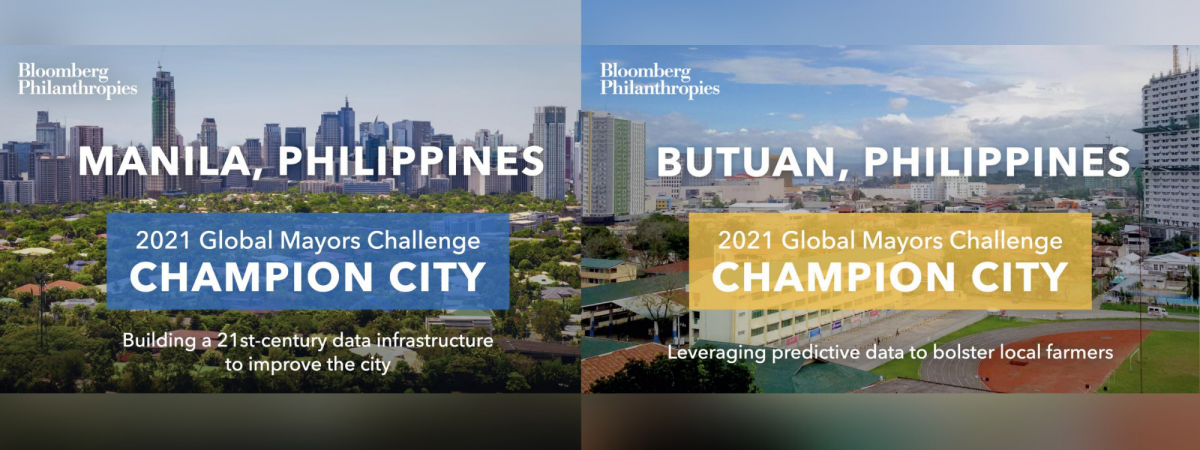
The Liveable Cities Philippines and the League of Cities of the Philippines have joined hands to promote the Bloomberg Philanthropies' 2021 Global Mayors Challenge.

The 2021 Global Mayors Challenge is an innovation competition that will identify and accelerate the most ambitious ideas developed by cities in response to the COVID-19 pandemic. Fifteen grand prize winners will be chosen at the final round and will receive $1 million each to implement their ideas.

The challenge will offer an enhanced program of support designed to meet the needs and ambitions of cities today. For the first time, the Challenge will be a global competition, a reflection of the urgency felt by cities around the world to develop new approaches amid the pandemic. Cities with a population of 100,000 or more are welcome to submit their boldest ideas at any stage of development. First 500 cities to RSVP will receive additional guidance from Bloomberg Philanthropies through a series of virtual meetings with global experts.

Applications close on March 21, 2021. To RSVP for this competition, please register at https://bloomberg.fluxx.io/apply/MayorsChallenge.

For more info, you can visit mayorschallenge.bloomberg.org

Happy Holidays from LCC!

The Liveable Cities of the Philippines would like to express its sincerest gratitude for your continued support and participation in our endeavor in making the Philippine Cities more liveable.

Our warmest greetings for this holiday season to you and your family!

Liveable cities

Published on December 25, 2020

The Liveable Cities of the Philippines would like to express its sincerest gratitude for your continued support and participation in our endeavor in making the Philippine Cities more liveable.

Our warmest greetings for this holiday season to you and your family!

Building Resilient Cities and Towns

Local government units (LGUs) must work together and take advantage of technology to create disaster-resilient towns and cities, according to architect Nathaniel “Dinky” von Einsiedel, president of the Alliance for Safe, Sustainable, and Resilient Environments (ASSURE). ASSURE is a group of environmental planners, architects, engineers, and related professionals directly involved with disaster risk mitigation and climate adaptation work.

Liveable cities

Published on October 21, 2020

Local government units (LGUs) must work together and take advantage of technology to create disaster-resilient towns and cities, according to architect Nathaniel “Dinky” von Einsiedel, president of the Alliance for Safe, Sustainable, and Resilient Environments (ASSURE). ASSURE is a group of environmental planners, architects, engineers, and related professionals directly involved with disaster risk mitigation and climate adaptation work. The group provided emergency assistance and built shelters in poor municipalities affected by Typhoon Yolanda in 2013.

“The impact of climate change, of weather-induced disasters, is that they do not respect political boundaries,” said Mr. von Einsiedel during the Liveable Cities Lab on Resilience webinar on October 21.

This is apparent in projects such as ASSURE’s Binahaan Watershed River Flood Study, initiated in 2015. By integrating rainfall data, information from flood hazard maps such as the extent and depth of flooding, and expertise from different organizations, ASSURE was able to create diagrammatic models showing how an area could be made both disaster-resilient and enjoyable for the community. 

A model for Candiis Creek in Leyte, for instance, identified flood-safe areas and a potential trail for runners and bikers. The study, which covered five municipalities in Leyte, required LGUs to share their issues and limitations as well as optimize their respective resources.

Projects and engineering interventions were based on on-the-ground information collected in numerous surveys conducted in the affected barangays, said Geraldine Santos, vice-president of ASSURE.

Technology also plays a huge role in making disaster-resilience efforts more efficient. “It is necessary to create that kind of balance between the technology that’s available there in the market, and the need for us to build this resiliency considering that we are facing more and stronger typhoons and all kinds of disasters, including the pandemic,” said Mr. von Einsidel.

Leonard Travis, team lead for urban and regional planning at real estate developer Empark Land Development, proposed a nationwide operations control center (OCC). International or national hubs, such as the Philippine Atmospheric, Geophysical and Astronomical Services Administration (PAGASA), can use information and communications technology (ICT) and the Internet of Things (IoT) to cascade real-time weather data to status-viewing screens in municipal hubs.

In the meantime, Empark is running a sample implementation in Cauayan City in Isabela Province. Built in 2019, the OCC in Cauayan monitors the weather through sensors installed in hydroponic sites across Isabela’s municipalities. 

The Philippine Disaster Resilience Foundation (PDRF), an organization on disaster management for the private sector, established an operations system called Handa in 2018 which identifies the hazard risks in different areas. This helps their member companies make informed decisions on how to set up their facilities and workforce. Handa runs on ArcGIS, a geographic information system that is used for creating and using maps, and compiling and analyzing geographic data. PDRF also runs the Innovations Academy for Disaster Awareness, Preparedness, and Training (iADAPT), an e-learning platform on disaster risk reduction, business continuity, and climate change adaptation. “Our thinking is that, during the pandemic, the typhoons will not stop… we have active volcanoes, we have active fault lines… The advocacy for preparing the community must continue,” said Veronica Gabaldon, executive director at PDRF. 

Improving Urban Mobility in the Philippines

In pre-COVID times, our urban transport systems were a daily challenge for many Filipinos. COVID-19 disrupted traditional urban systems and made life more difficult for people. Though we all want to open up the economy by allowing at least 50% of workers to return to work, our mass transit systems in Metro Manila, for instance, only allow up to 30% to actually find a ride. Cities need to adapt quickly and more creatively than ever before.

Liveable cities

Published on October 8, 2020

In pre-COVID times, our urban transport systems were a daily challenge for many Filipinos. COVID-19 disrupted traditional urban systems and made life more difficult for people. Though we all want to open up the economy by allowing at least 50% of workers to return to work, our mass transit systems in Metro Manila, for instance, only allow up to 30% to actually find a ride. Cities need to adapt quickly and more creatively than ever before. Initiatives such as more non-motorized connections, changes to long-standing public transport operations, the creation of new and innovative urban mobility solutions, and even contactless payments systems will all be needed.  Strategic urban mobility planning should meet the ever-changing daily and long-term transportation needs of citizens, the logistics of businesses, and traffic flows, in a way that values accessibility, safety, and greater efficiency. 

In the Liveable Cities Lab on Urban Mobility held last 7 October 2020, presented by Liveable Cities Philippines, League of Cities of the Philippines, and Globe Telecom, has gathered a panel of speakers and technical experts to share their solutions and initiatives on how cities and municipalities can improve urban mobility in light of the COVID pandemic. Speakers include: Catarina Heeckt, Policy Fellow, LSE Cities, London School of Economics and Political Science; Anton Siy, Head of Transport, Pasig City; Arch. Paulo Alcazaren, Environmental Planner and Landscape Architect; and Randy Del Valle, Vice President and General Manager for Retail, Pilipinas Shell Petroleum Corporation.

During the session, Catarina Heeckt discussed the global context and academic perspectives of urban mobility and COVID-19, as well shared her insights on her paper published under LSE on “Mobility for the masses -  rethinking urban accessibility in the aftermath of COVID-19” where she underscored that “If we do not include informal transit operators in COVID-19 recovery efforts, we are missing a crucial opportunity to make these services cleaner, safer, and more efficient while protecting millions of jobs.” Likewise, renowned Urban Planner, Paulo Alcazaren, talked on mobility-friendly urban design that fosters pedestrian, non-motorized and alternative modes of transport where he shared different examples locally such as in Iloilo and BGC in Taguig. Anton Siy Head of Pasig City Transport then presented local government initiatives such as cycling, and other alternative solutions for better mobility. Lastly, Randy del Valle, Vice President and General Manager for Retail, of Pilipinas Shell Petroleum Corporation, discussed the trends in mobility in light of COVID-19, and talked about different solutions to address and improve mobility in the Philippines from digitization to services. 

The Lab on Urban Mobility was moderated by Mr. Suite Suarez, Formerly Corporate External Relations, Shell International. The Liveable Cities Lab is held every other Wednesday. The series feature topics to equip city leaders and stakeholders with knowledge and insights to help them best serve their communities. 

The next Liveable Cities Lab Session will focus on Resilience which will be held on October 21, 2020 (Wednesday), 3:00 - 5:00 p.m. Sign up: http://bit.ly/LCCLAB7RESILIENCE

Press Release | Zoom Recording | Facebook Recording | Presentation Materials

Harnessing the Power of Data Analytics for Managing LGUs

 As we move towards the digital age, data will be the new “oil” which fuels better planning and informed decisions. Data plays an important role, especially in local governments. It allows local chief executives and managers to design better solutions, gain insights in delivering and enhancing services, formulate policies, and improve accountability and understanding of local operations.

Liveable cities

Published on September 2, 2020

 As we move towards the digital age, data will be the new “oil” which fuels better planning and informed decisions. Data plays an important role, especially in local governments. It allows local chief executives and managers to design better solutions, gain insights in delivering and enhancing services, formulate policies, and improve accountability and understanding of local operations.

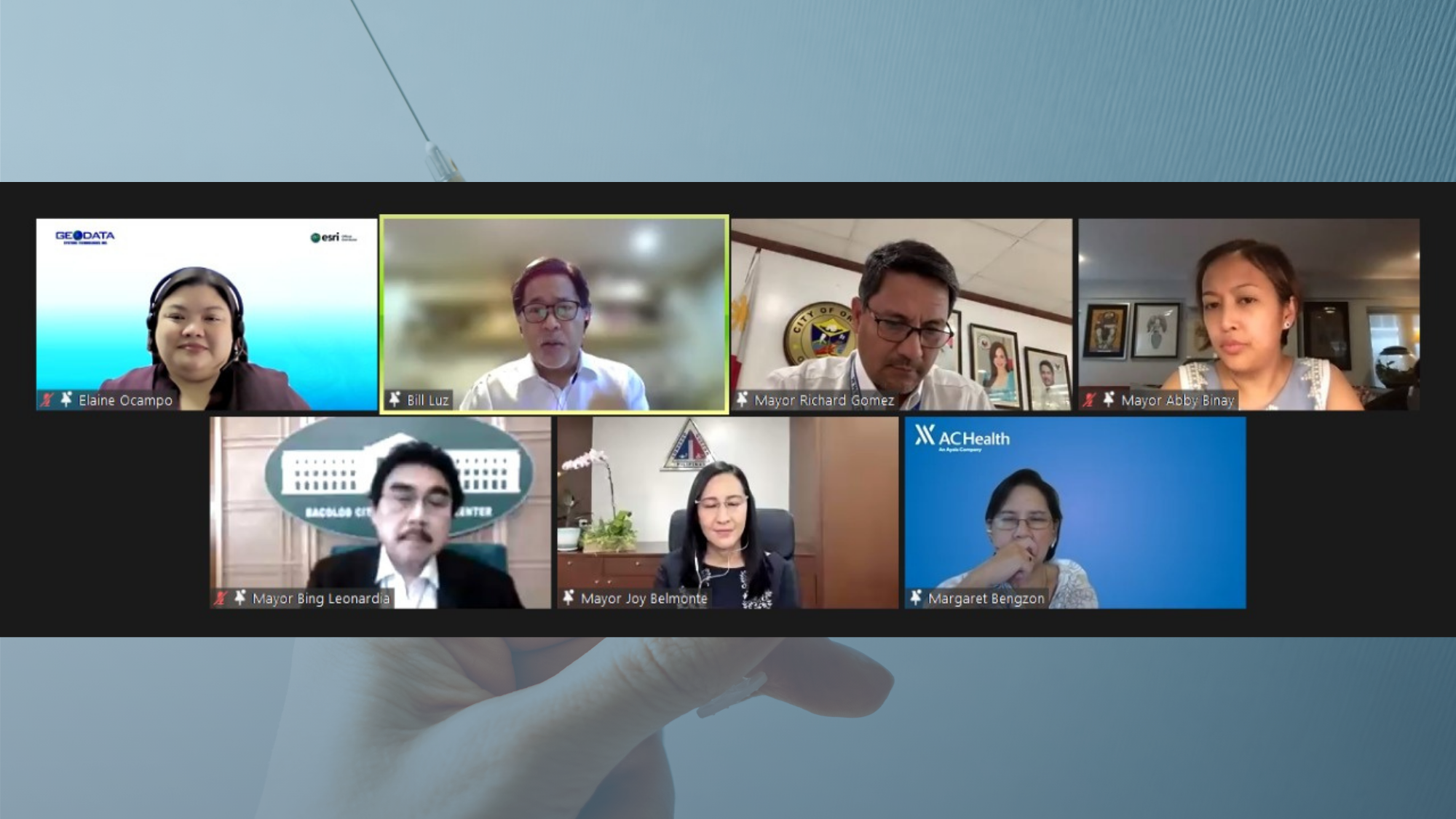
In the Liveable Cities Challenge (LCC) Liveable Cities Lab on  “Data Analytics 101: The Value and Use of Data for Managing LGUs” held last 2 September 2020, the League of Cities of the Philippines shared with the audience how can the LGUs kickstart to be data driven in their everyday operations, Mr. Brody Sapnu, together with Ms.Soleil Manzano from LCP shared the four key messages that LGUs need to remember: (1) Collect and consolidate data, LGUs must start tracking their data in all ways possible, as they said what gets measured, gets managed, (2) Start simple, but better to utilize available technology, LGUs cannot avail of all the latest technologies but that doesn’t mean they cannot harness what is readily available, they must be resourceful, (3) Invest in data management system and data analytics, in today’s digital worl, data is a powerful tool not only for LGUs but for all, investing in a good data management system will benefit the local government in the long run, and (4) Ensure data quality, integrity, and consistency, while all of the management tools are important, we must also ensure the quality and integrity of data.

Likewise, United Nations Development Programme shared their initiative on Sustainable Development Goals for Cities, presented by Yemesrach Workie, Senior Policy Adviser of UNDP Philippines, and Francis Capistrano, Accelerator Lab’s Head of Experimentation. 

Aside from League of Cities of the Philippines and United Nations Development Programme,  the webinar is also joined by Pia Faustino, Head of Data Insights and Social Sector Engagements of Thinking Machines, and Miguel Acosta, Head of Data Governance Enterprise Data Office of Globe Telecom where they shared their experience and expertise on how we can harness the power of data through analytics and how the localities start their data governance journey. 

Moderated by LCC Chair Guillermo Luz, the Liveable Cities Lab is held every other Wednesday. The series feature topics to equip city leaders and stakeholders with knowledge and insights to help them best serve their communities. 

The next Liveable Cities Lab Session will focus on Govtech: Technology for LGUs which will be held on September 16, 2020 (Wednesday), 3:00 - 5:00 p.m.


e-Commerce in the New Normal

With the need to pivot to the new normal, Local Government Units (LGUs) are encouraged to boost their e-commerce for the convenience and safety of their constituents and to help SMEs in their online business.

Liveable cities

Published on August 5, 2020

With the need to pivot to the new normal, Local Government Units (LGUs) are encouraged to boost their e-commerce for the convenience and safety of their constituents and to help SMEs in their online business. 

In the recent Liveable Cities Challenge (LCC) Webinar Series: E-Commerce in the New Normal,   Frances Caluya, Globe Industry Marketing Manager for Hotels, Restaurants and Cafes, Globe MyBusiness,  said the pandemic has spurred consumers to rely more heavily on online purchases and services. Recent statistics show that due to COVID-19, 23% of the Philippine population is spending more time shopping online.

Caluya says it's about time the LGUs maximize e-commerce, to help their constituents, and to support SMEs by ensuring that connectivity and access to the internet are present.

“Now is the right time to invest in electronic commerce (e-commerce) in the Philippines. We should harness the power of the internet because selling online now means reaching more people. And reaching more people, without the risks of the old ways in selling products or services, means more opportunities for SMEs to grow and thrive,” Caluya explained.

Caluya added that more establishments and retail shops are now using the internet to sell and to survive the economic downside of the pandemic. The demand for online services has increased. 91% of online Filipinos have visited an online retail store. Of this number, 71% have bought a product online. 

Before the onset of the pandemic, only 2% of SMEs in the country sold online. Worldwide, e-commerce sales are expected to increase from $1B in 2019 to $5-6B by 2025.

The Department of Trade and Industry (DTI) likewise recognized the sudden increase of activities in e-commerce in the country.  DTI Asec. Jean Pacheco acknowledged the contributions of Globe and GCash in making this a reality especially that the economy is among the many sectors hit by the pandemic.

“E-commerce is here to increase accessibility. You don’t have to be physically present and you can do business with anyone, anywhere at any time to sell your products. Even if you are outside the Philippines, Pacheco added.

Pacheco assured that the government and the DTI want to promote e-commerce so that there will be more merchants, and small-medium enterprises which will take advantage of the new technology especially during the pandemic.

Justin Yap, Head of Acquisition for Non-Traditional Merchants of GCash, said LGUs can improve their services in so many ways by using the GCash app. He cited the example of the challenge being imposed by physical distancing. 

“By using the app, people can register their businesses through their mobile phone  in just a matter of 8 minutes instead of waiting in line and run the risk of contracting the disease. It is not only a platform but a way for business and the LGUs to rethink their current approach in handling their needs. How will they pivot to the new normal?,” Yap said.

GCash is currently the number one e-Wallet provider in the Philippines with at least 23 million customers and 75,000 QR merchants. Downloading the app is free of charge. Aside from ease of doing business, using GCash likewise promotes transparency and minimizes red tape and corruption in LGUs dealings with their constituents. It is also a good way to avoid contracting COVID-19 because a user doesn’t need to physically touch paper bills that might be contaminated with the deadly virus.

For his part, Paco Magsaysay, CEO of Carmen’s Best, recognized the help of Globe and GCash in paving the way towards doing business online that enables even the ordinary entrepreneurs to have a fighting chance in these trying times.

“We are lucky that there are a lot of options ongoing on the e-Commerce platform. We have chosen to work with 0917 Ventures of Globe to help us set up our e-Store or e-Commerce store. The great thing about it is it ties in logistics for our e-Store with Globe. For the ice cream business, logistics is very critical because our products have to be frozen all the time,” Magsaysay said.

Hosted and moderated by Bill Luz, chair of the Liveable Cities Challenge, the second session of  the eight part LCC Webinar Series drew the participation of close to 400 attendees including 14 mayors, one Vice Governor and representatives of 66 cities and municipalities all over the country.


Addressing the current Health Challenges in the New Normal

In light of the COVID pandemic, the global lockdown has greatly affected cities around the world. Some cities have become epicenters of the pandemic, which intensified the spread and transmission of the virus with their dense population and transport networks. Hence, in line with this, cities play a critical role when it comes to its containment and response.

Liveable cities

Published on August 19, 2020

In light of the COVID pandemic, the global lockdown has greatly affected cities around the world. Some cities have become epicenters of the pandemic, which intensified the spread and transmission of the virus with their dense population and transport networks. Hence, in line with this, cities play a critical role when it comes to its containment and response.

In the Liveable Cities Challenge (LCC) Liveable Cities Lab on  “Digital Transformation in a Post GCQ World: Building Healthy Cities and Municipalities” held last 22 August 2020,  KonsultaMD shared with the audience how can the LGUs extend the giving of health services especially to the far-flung or remote areas through telemedicine. KonsultaMD is a subscription-based telehealth service that’s available 24/7, allowing access to skilled and licensed Filipino doctors who can provide safe medical assessment and advice on basic healthcare and proper medication.

Cholo Tagaysay, Chief Operations Officer of KonsultaMD highlighted that “While telehealth is not the best alternative to actually seeing a doctor, it is the next best thing when there is no doctor physically present. It can also address the cost of healthcare and most importantly, you can call a doctor as much as you need to.”
 
With the pandemic affecting almost all parts of the country right now, doctors are harder to find especially in the provinces and rural areas.  According to Tagaysay, the ratio is that for every 33,000 Filipinos, there is only one doctor in the country. 

Moreover, the Department of Health is also spearheading the implementation of telemedicine especially now that the country is moving towards the new normal and the pandemic has shown challenges that need to be addressed with immediate but impactful solutions.

“Telemedicine improves access to health information and services hampered by geographic, transportation and communication barriers as well as health provider shortages,” said Dr. Eric Tayag, Director of Knowledge Management and Information Technology Service of the DOH.

Aside from Dr. Tayag and Mr. Tagaysay, Ms Sacha Bootsma, Technical Officer on Health Emergencies of the World Health Organization also spoke about the current COVID trends worldwide and its implication on Public Healthcare. Likewise, Dr. Gia Sison, Head of Women’s Wellness Center of the Makati Medical Center also talked about the impact of the COVID pandemic in our mental health, and as she explored the pandemic’s emotional toll and shared coping strategies, as well as insights on the Philippines’ COVID-19 response.

Moderated by LCC Chair Guillermo Luz, the Liveable Cities Lab is held every other Wednesday. The series feature topics to equip city leaders and stakeholders with knowledge and insights to help them best serve their communities. 

The next Liveable Cities Lab Session will focus on Data Analytics for Cities which will be held on September 2, 2020 (Wednesday), 3:00 - 5:00 p.m. 

Going Digital

If there’s one thing that COVID-19 taught us, it’s that we are going to have to move to a much more digitally-enabled world in the future. Over these last two months of Enhanced Community Quarantine (a.k.a. Lockdown), many of us have had to use more technology and digital services than ever before. From work meetings to communicating with family, ordering supplies, reading news, social media, and entertainment, digital use is up.

Liveable cities

Published on May 16, 2020

If there’s one thing that COVID-19 taught us, it’s that we are going to have to move to a much more digitally-enabled world in the future. Over these last two months of Enhanced Community Quarantine (a.k.a. Lockdown), many of us have had to use more technology and digital services than ever before. From work meetings to communicating with family, ordering supplies, reading news, social media, and entertainment, digital use is up. This may have covered only a fraction of the population but it’s a trend which is bound to rise.

By all accounts, this trend will continue. As we transition from Enhanced Community Quarantine to Modified Enhanced Community Quarantine to General Community Quarantine to Modified General Community Quarantine to New Normal (and to every new stage in between), this transition will take time, effectively locking parts of the population down. And even when things open up, in reality they won’t be that open. A vaccine seems a bit off into the future and this coronavirus may end up recurring like a seasonal flu.

As society and the economy open up, the practice of social distancing will alter the way we do business and government and force new business models and practices upon us. Some of these changes may be temporary but in all likelihood, most may become permanent fixtures in our lives. Some should probably become permanent, because they will be changes which benefit all.

Some of the changes will be obvious to spot because they have already been on the scene, like e-commerce. With retail shut down for the last two months, those businesses with an e-commerce platform or who have started one up quickly have been winners in this game. Their ability to take orders, payment, and deliver goods have enabled them to survive this crisis. In many cases, they have even thrived and done better than their traditional business models. Logistics businesses – when their workers can get to the workplace – have also ridden this wave. Both will come out of this crisis probably doubling down on the digital side of their respective businesses.

The education sector will undergo some deep changes. Social distancing will keep classroom sizes small and less dense compared to before. It’s hard to imagine that schools will be able to extend into more shifts of classes (or if they can even afford to), so online education will be one obvious route to go through. Except, it’s not as easy nor obvious as it sounds. Even if courseware were modified to go digital, teachers will need to be trained. More importantly, students will need to be equipped and the telecommunications infrastructure will need to be beefed up so services are both accessible and affordable. However, this may be one of those changes which should be permanent as this a direction education should go into anyway.

In my opinion, the biggest move for digital services should be in government, both national and local. If there ever was a time to cut red-tape by going into online government services, this is it. Under normal circumstances, people need to commute to several government offices and spend a long time in queues to obtain permits and licenses and make payments for a single transaction (think of government procurement, business permits, building permits, utility permits, any form of payment, etc). With no public transportation for the moment and the need to maintain social distancing, this makes such transactions all but impossible, certainly unbearable. If government could migrate more of these transactions from analog to digital, these are the types of changes which would benefit all, government included. These should be permanent changes.

All this would not be possible without expanding our telecom infrastructure and capacity. Ironically, these very same permits are full of red-tape. I recall it takes up to 28 local and national permits which can take up to eight months to obtain per cell site, for instance. And it’s a pretty analog, paper-driven process.

If we are going to make headway in the path towards digitization, this will be a necessary step.


Guillermo M. Luz is Chief Resilience Officer of the Philippine Disaster Resilience Foundation (www.pdrf.org).

Watch Our Liveable Cities Labs

Watch Now