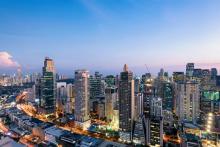
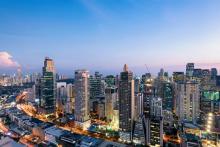
Today’s City is facing a new challenge. Aside from rapid urbanization, congestion, the need for mass transit, water resources, power, better law enforcement and public services, the City now faces the challenge of a climate-defined future. In recent years, climate change and natural disasters have become the one, unpredictable variable which has affected cities. From climate events such as typhoons, monsoon rains, and floods to natural calamities like earthquakes and volcanic eruptions, cities across the Philippines have fallen under greater risk and disruption.
This disruption has come in the form of human loss, economic loss, and lost productivity. Storms such as Agaton (2014), Yolanda (2013), Pablo (2011), Sendong (2010), Ondoy (2009), and two earthquakes such as Bohol(2013), Baguio (1990), and volcano eruptions, Mayon (1993), and Pinatubo(1991), have struck across the country, causing great havoc in the affected areas.
Preparing for a climate-defined future
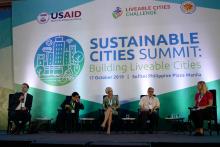
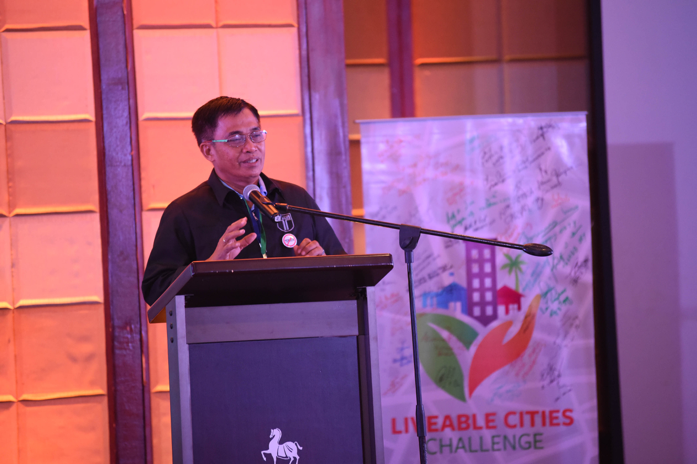
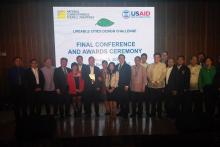
The Liveable City Design Challenge, organized by the National Competitiveness Council, APEC 2015 National Organizing Council, World Wildlife Fund, and the Alliance for Safe and Sustainable Reconstruction (ASSURE) with Asia Society and the Urban Land Institute, is a planning and design competition whose objective is to get city planners across the Philippines to better plan their respective cities and municipalities for a climate-defined future by being more aware and better prepared for disaster-risk reduction. The first of its kind, city planners will be encouraged to design Liveable Cities that offer safety, convenience, livelihood, lifestyle, and sustainability that attract people to live, work, and play so their cities can be competitive.
"By launching this Design Challenge, we hope to start a movement for better urban planning across the country to make our cities fun, vibrant, and safe places to live, work, invest in, and visit. In order to build a competitive country, we need to build competitive cities," according to Guillermo M. Luz, private sector co-chairman of the National Competitiveness Council and a member of the APEC National Organizing Council.
Eighteen cities and municipalities have accepted their invitations to join the competition – Angeles, Bacolod, Baguio, Baybay (Leyte), Butuan, Cebu, Cagayan de Oro, Iloilo, La Union (San Fernando), Legazpi City, Marikina, Olongapo, Ormoc (Leyte), Surigao, Tacloban, Valenzuela and Zamboanga City. Cities will include those hosting APEC Meetings in 2015 and others that are vulnerable or have been affected by disasters in the past.
Competition teams representing these cities must come up with a Strategic Vision and Plan for a Resilient and Liveable City and select one of two competition categories: 1) Developing a Disaster-Resilient Government Center or 2) Developing an APEC Meeting Venue.
The Liveable Cities Design Challenge is sponsored by USAID, which has been supporting the Cities Development Initiative programs like Project INVEST in three cities across the country. USAID is expected to add more local government units to the program when it launches Project SURGE later in 2014.
The Design Challenge has also received sponsorship support from Microsoft, which will build the crowdsourcing website for the competition teams and make available its CityNext mobile application.
Involving Public Insight
The challenge also aims to incorporate the ideas and plans of Filipino citizens who are interested in helping create a disaster-resilient and sustainable city. Submissions will be open on the Liveable Cities Challenge website for a certain time period where the public can submit their proposals to the city of their choice for the competition team’s review. A Public Choice award will be awarded at the end of the competition for the city with the most votes. For more updates and information, follow the challenge on facebook (Liveable Cities Design Challenge Philippines) and twitter (@LCDCPhilippines).
Phases of the Competition
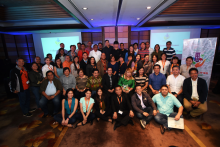
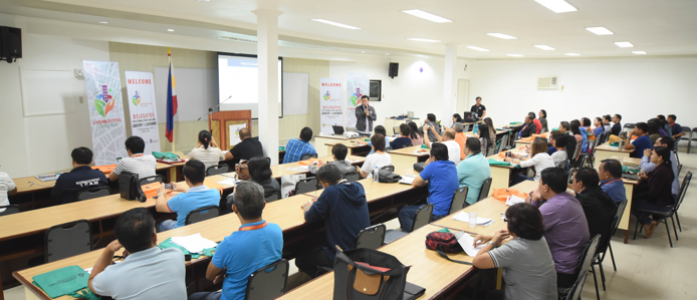
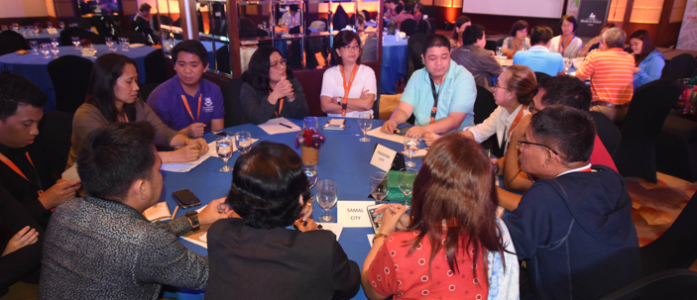
Cities or municipalities that accept the invitation will have to commit to the three phases of the competition. The first phase involves participation in the Pacific Cities Sustainablities Initiative Forum from March 11-13, 2014, where the competition teams will be oriented on essential principles in liveable city planning and engage in a dialogue on urban planning and design with experts rom around the world.
Carlos Rufino, President of Urban Land Institute – Philippines states, "The holding of the PCSI Forum in Manila is timely and provides a wonderful opportunity for our Mayors and City Planners to meet international experts."
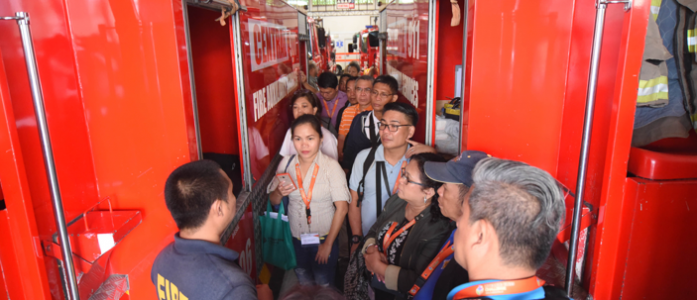
The second phase entails working with a team of mentors to develop planning and design concepts for their respective cities. A team of mentors provided by ASSURE, will travel to their respective cities for field visits and mentoring missions throughout the mentoring stage.
The third phase is where the competition teams will finalize their designs for review of the judges. They will be submitting their conceptual designs, architectural perspectives and site plans for final evaluation.
The Design Challenge will bring together a Philippine and international panel of judges to review submissions. Entries will also be displayed in a mall and placed online on the competition’s website for public viewing. Winning entries may become eligible for inclusion in a multi-year technical assistance program of USAID.
Guillermo M. Luz (gm.luz@competitive.org.ph) is private-sector cochair of the National Competitiveness Council.